Care home and frailty nurses stage unique job swap
A project allowing nurses from care homes to shadow frailty specialists in hospitals and vice versa has been hailed as a great success.
The scheme is the first of its kind in the country and was led by registered nurse Sharon Lee, senior workforce programme lead for NHS Kent and Medway, in partnership with Dr Rakesh Koria, Ageing Well and Dying Well clinical lead, and Dr Jacqueline Gilbert, frailty consultant at the Queen Elizabeth The Queen Mother (QEQM) Hospital in Margate.
Nurses from Folkestone Care Centre were able to spend a day at the frailty same day emergency care unit at the QEQM, while a team from the hospital spent a day in the care home.
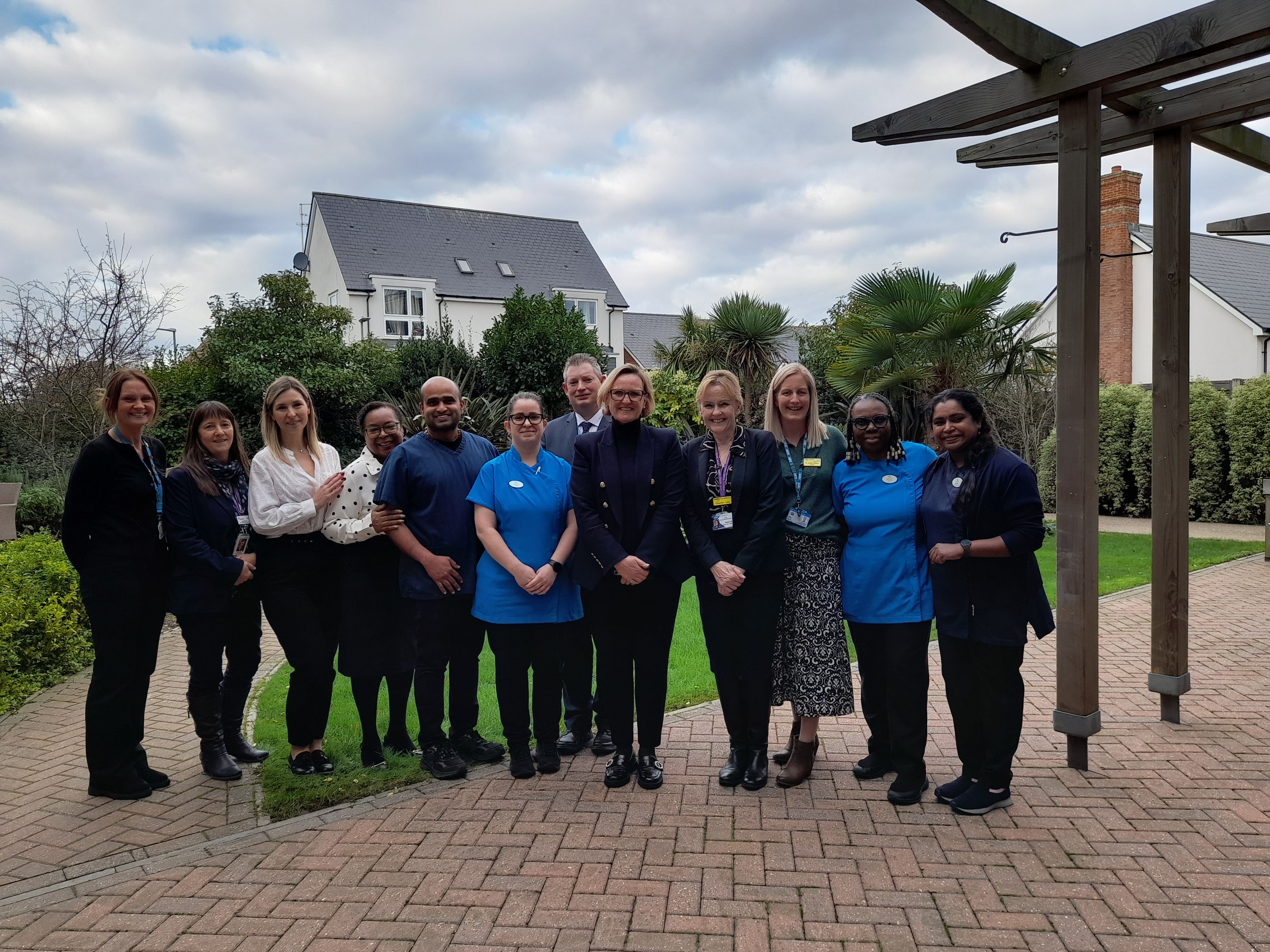
NHS England’s regional chief nurse Andrea Lewis visited QEQM and Folkestone Care Centre this week to meet the nurses, accompanied by Paul Lumsdon, chief nursing officer for NHS Kent and Medway, and Mark Mulverhill, deputy cabinet member for social care at Kent County Council.
Andrea said: “This is a really exciting project and it has the foundations to be a great model of neighbourhood health in action.
“It is about upskilling our nursing workforce as a whole and ensuring we understand what our partners need and how we can all work together for our patients."
Paul said: “This shadowing programme demonstrates the NHS 10 Year Health Plan’s vision for neighbourhood-based, integrated care by bridging hospital and community settings.
“Embedding social care nurses within frailty units has not only deepened understanding of complex needs but also strengthened professional networks and continuity of care, making sure frail older people receive seamless, person-centred support whether in hospital, or a community setting.”
Sharon said: “We wanted to deepen understanding of frailty across hospital and community settings, and to understand the challenges that each service faces.
“But what we actually achieved was a much closer working relationship that will help frail older people receive joined-up care, whether that’s in a hospital, care home or their own home.
“Nurses from both settings were able to learn from each other and understand how they can work together to provide a seamless experience for older people who are living with frailty.
“This cohort often have complex needs and by working together we can recognise the physical, psychological and social factors that affect their health.”
The project supports the 10-year plan for the NHS, which focuses on neighbourhood health and community-based care that puts people at the heart of their health journey.
Patients are referred directly to the frailty team at QEQM from care homes, GPs, community teams, and the ambulance service. The team work closely with families to assess patients and discover how they would like to be treated, and then liaise with community services to put services in place and plan for their future care.
The team are expanding the programme to more care homes, and have arranged similar shadowing visits at hospices too.
Jacqueline said: “We learned a lot about the challenges we each face, and how we can work together to improve communication, for example doing a telephone handover when a patient is discharged to a care home.
“I’ve been really impressed by the commitment from care home leaders to this project and the tangible benefits it will have for our patients.
“We can all learn from each other and make sure older people don’t fall through the gaps and receive joined-up care that is tailored to their needs.”
Nurses from Folkestone Care Centre said the project gave them valuable insight.
Registered nurse and trainee clinical lead Neethu Babu said: “It was a wonderful learning experience and great to understand what happens in the hospice and the ward. We all found the multidisciplinary team meetings useful. Having this knowledge enables us to provide continuity of care.”
Registered nurse Ramona Enacha agreed. She said: “Now when we call the hospice or the hospital, we know who we’re speaking with – we can put a face to the name. We all feel very lucky to have been part of this project.”