Celebrating 25 years of the critical care outreach team
Our critical care outreach team (CCOT) is celebrating 25 years since it first began. The team works across the wards and the critical care units, helping staff spot patients who are becoming unwell and need extra support.
The service began in January 2001. It gave ward staff a clear way to raise concerns and ask for urgent reviews when they were worried about a patient. At first, CCOT only worked on weekdays from 9am to 5pm but grew into a 24‑hour service. Today, the team is led by Eibhlin Moore.
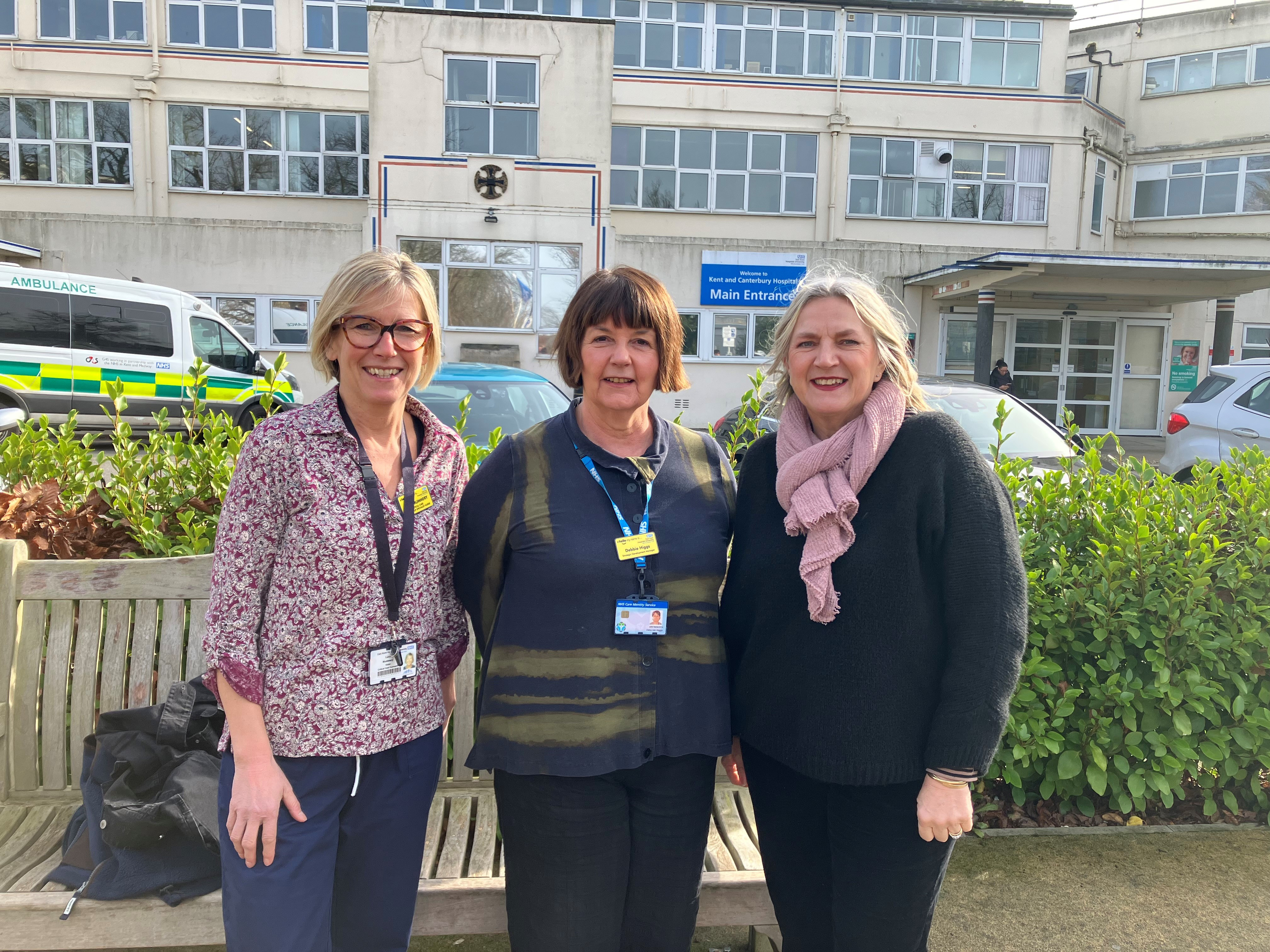
Some of the original team members still work in the Trust. Debbie Higgs was one of the first critical care consultant nurses and the team’s first manager. She remembers how the team started.
She said: “It emerged from a case where nurses on a ward at QEQM had found it difficult to raise concerns.
“Initially it was as simple as calling the unit and someone would be able to advise. But we soon realised it had much more potential, and we created a dedicated team to respond in person.”
At the same time, a national review of critical care services was taking place. The CCOT team shared their experiences and helped shape a national improvement programme.
Some of the team’s early work included using early warning scores to spot patients who were getting worse, and starting ward‑based non‑invasive ventilation. These approaches are now part of everyday care. Another founding member, Stefa Buras Rees, remembers these early days well.
She said: “It was a huge privilege and a huge responsibility to work as an outreach nurse.
“We covered every ward and I would visit them all each day and see if there were any patients they were concerned about.
“I think you develop a sixth sense of who you need to review quickly and who you need to monitor. For those who required critical care it was lovely to visit the unit and see the patients getting better each day.”
Another founding member, Lucy Mummery, now works in critical care rehabilitation. She remembers how wide the team’s role was at the beginning.
She said: “At first, we were all things to everyone — but that just wasn’t sustainable.
“Our motto was ‘critical care without walls’. We focused on education, caring for patients before they needed admission to critical care, and supporting them again when they stepped down afterwards.”
Eibhlin reflects on the strong foundations of the team.
She said: “I joined CCOT when Debbie was leading the service and she didn’t just lead CCOT — she set the standards that continue to guide us today.
“I could not be prouder of my role within CCOT; the opportunities and experiences it has given me, and most importantly the mentors I have had the privilege of learning from along the way.”
Mel Ashraf, one of the CCOT lead nurses, added: “It is both a privilege and an honour to celebrate a remarkable 25-year journey of growth, innovation, and unwavering dedication.
“We stand proud not just of how far we’ve come, but of the future we continue to shape. Our commitment to safety, excellence, and compassionate care remains as strong as ever.”
Over the years, CCOT has led many projects. These include education and treatment for sepsis, introducing NEWS2 across the organisation, helping staff recognise acute kidney injury, and supporting the introduction of Martha’s Rule, led by Steve Jenner.
CCOT’s success is due to many people — critical care matrons, ward managers, staff on the units, and the medical teams who respond to CCOT referrals. Working together has been essential, and the team is proud of how the service has grown.
Today, CCOT looks very different from how it was in 2001. It has expanded to meet the needs of patients at risk of becoming more unwell. The team’s skills and responsibilities have also grown. This has created many opportunities for staff. Without the hard work of all past and present team members, the service would not be what it is today.
As CCOT celebrates 25 years, the team is proud of everything they have achieved and excited for the future.