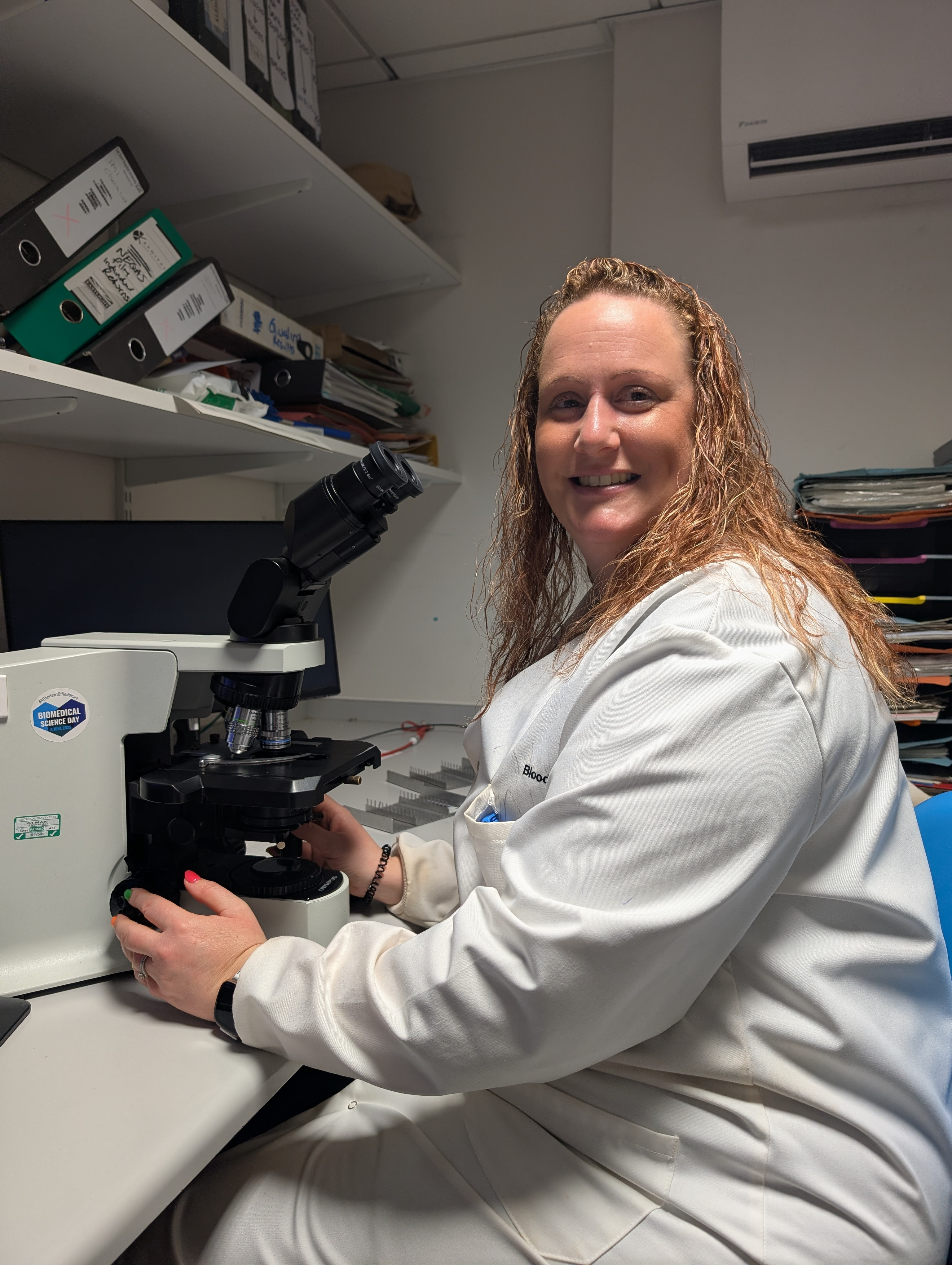
International Women and Girls in Science Day – meet Roese Pinnick
Roese Pinnick has never met any of her patients – but she and her team play a vital role in their care.
As chief biomedical scientist for haematology at the William Harvey Hospital in Ashford, she plays a key role in delivering a range of tests on blood samples, helping clinicians reach a diagnosis and decide on the best course of treatment. This includes blood film morphology, where she and the team can be the first to identify a potential new leukaemia and expedite results to the clinician.
The team also ensure the right blood products are available for transfusion, whether in an emergency or for routine treatment.
Roese, who has progressed from a role as a medical lab assistant to now managing a team of 25 healthcare scientists, said: “Haematology and blood transfusion are my passion, partly because of the impact we can have on patient outcomes.
“We do all the routine transfusions that help people stay well, with patients who are in week after week and it feels like you have a real relationship with them.
“You get to know people without seeing their face, and know we are helping them continue living their life.
“Then there are the emergencies, where you can help save a life, or give someone more time. One of the hardest is patients with a ruptured abdominal aortic aneurism, where they might need 20 or 30 units of blood.
“They may die despite everyone’s best efforts, but we have been able to give them an additional 12 hours which means their family has time to say goodbye.”
Today is International Women and Girls in Science Day, and Roese has been inspired by female scientists throughout her career.
She said: “Every lab I have worked in has been female heavy, and my manager always flew the flag for women and I have been inspired by the women who has supported me through my career.
“Gender doesn’t come into it – it’s having the most suitable person for the job.
“When I started there were pink jobs and blue jobs within the lab; it wasn’t meant maliciously, it was just how things had always been, but that doesn’t happen now.
“We welcome students for their practical year of their biomedical science degree, and for the past two years they have all been women. It’s wonderful to have women in senior positions to inspire them.”
Roese initially applied for a role in pathology reception, but was offered a junior role in the lab instead, and has developed her career within the Trust, apart from a two-year secondment working in Jersey.
She said: “My career found me, really. My parents wanted me to go to university but I didn’t want to leave my horse; he is home-bred so is my baby.
“I had always been interested in science, so I looked for a job in that field and it was luck that I ended up in the lab.
“It was quite daunting walking in for the first time. No one ever thinks about what goes on behind the scenes, they have a blood test and then the magic happens.
“I could never be a nurse, but all we do is for our patients – we just do it behind the scenes.”
Roese works hands-on in the lab at least once a week, and uses unusual cases for training. She is also keen to encourage others to donate blood so it can be used to help others.
She said: “I remember standing looking at the fridges with all the blood in, and thinking that’s all come from somewhere, from people who had taken time out to donate their blood.
“I had never done it at that point, but I started then. People always assume blood will be available if they need it, but it only is because of the generosity of people who volunteer as blood donors.”