Trust is the first in the country to trial AI tool
East Kent Hospitals is the first NHS Trust to trial a potentially life-saving artificial intelligence tool.
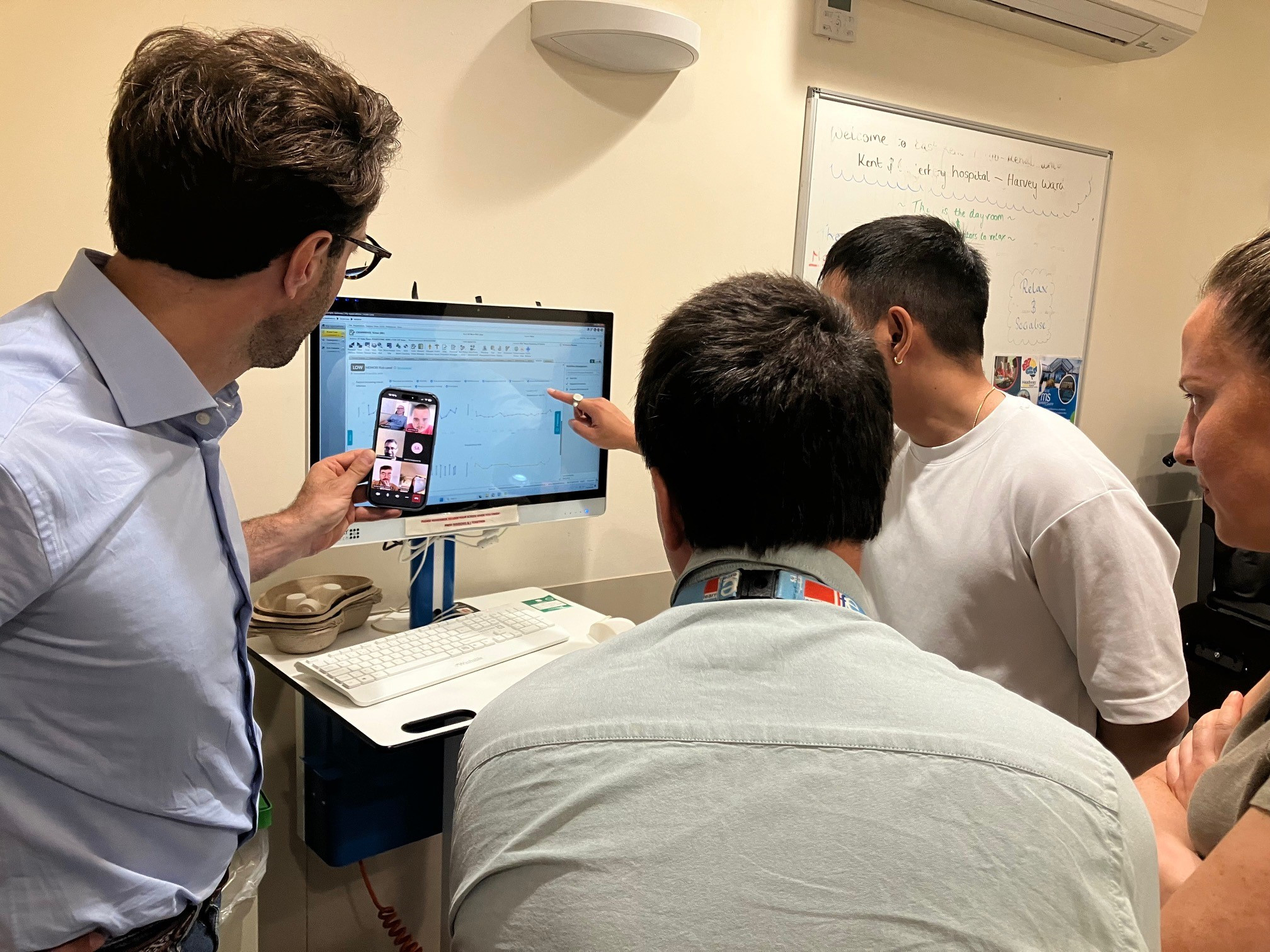
A team on Harvey ward at the Kent and Canterbury Hospital are piloting MEMORI, which analyses routine clinical information to generate an individual infection-risk level for each patient.
It is designed to help clinicians identify infections at an early stage, allowing treatment to start sooner and reducing the risk of serious complications such as sepsis.
The pilot is part of a collaboration between the Trust and Sanome, a UK health technology company. MEMORI, co-developed with teams at the Trust and embedded within Sunrise, is being offered cost-free as part of a longer-term partnership to bring clinical AI safely to the bedside.
Ward manager Julie Jones said: “We are all so excited to be the first NHS team to use MEMORI and are looking forward to being pioneers.
“It has incredible potential in terms of recognising signs of infection early, alerting clinicians to review the patient and potentially change their treatment plan.
“Our patients can be very complex and can deteriorate quickly, so early intervention is vital and potentially life-saving.”
Victor Casambros, 38, from Folkestone, was the first patient to have his observations entered into the system.
He has been on Harvey ward since April, after suffering a major stroke in January. With the help of his wife Emma, he said he was excited to be part of the pilot.
As a former digital communications manager, he is interested in new technology and was pleased to be able to be involved.
Victor’s observations were taken and entered by student nursing associate Bobbie Buddle, who was on her second day of placement on the ward.
She said: “I think MEMORI is a really amazing tool with huge potential and I think it’s pretty cool that I’m able to be a part of it being used for the first time in an NHS hospital.”
Sanome was founded by Benedikt von Thüngen, after his father developed sepsis following a cut on his toe. Unable to get a GP appointment, he had visited an emergency department but his condition deteriorated while he was waiting to be seen.
Benedikt said: “He called me in a total panic from the hospital and said he felt like he was going to die.
“I asked him to put his camera on and it was immediately obvious he had many of the signs of sepsis, including rapid breathing and mottled skin.
“He ended up spending several weeks in acute care as the staff desperately tried to save him.
“We have the data to spot early deterioration, and that’s what MEMORI is about.
“It will analyse the individual patient data, and use what it has learnt from thousands of other patients, to predict the infection risk score.
“This can empower clinical teams to take action, and gives them a greater window of opportunity to change a patient’s outcome. If you get a patient on the right treatment quickly you can prevent deterioration from happening.
“Being able to launch the tool in the NHS is a very exciting and emotional day, and the result of a lot of hard work.”
MEMORI analyses routine clinical information already recorded in the patient record, including observations, medications, and demographics, to generate an infection-risk level. Staff including nurses, healthcare assistants, consultants and therapists worked with Sanome teams on its development to ensure it supported real clinical practice.
It can also help free up staff to focus on patient care, with the confidence that the system will alert them if the infection risk level changes.
Benedikt said: “People work in healthcare because they want to provide care and comfort, not go hunting for information or analysing that information.
“Tools such as MEMORI help them do that job of caring.
“I’m really grateful that the team at East Kent Hospitals believed in us and that we can support busy teams in this way.
“It has been a fantastic partnership; everyone wants this innovation to happen, and for patients to be able to benefit.”
The tool sits alongside existing monitoring and escalation processes on the ward, including NEWS2, providing an additional signal to support earlier clinical awareness.
Eibhlin Moore, deteriorating patient lead nurse, said: “I think this is a really exciting opportunity to use a tool that will help us identify infection earlier.
“It is focussed on increasing observations without adding unnecessary pharmacology, and complements the existing tools we already use such as NEWS2. This is an extra layer to support in detecting healthcare-acquired infections that could lead to sepsis.”
Edith Avornyo, clinical deployment lead and clinical safety officer for Sanome, has been working with teams at the hospital for months to ensure they were ready and could safely use the system.
She said: “I feel like part of the team here; they have been welcoming, engaging, and collaborative.
“Everyone was keen to see MEMORI deployed and understands the important role AI can play in patient safety.
“The team always put patient safety first, in every decision they make, and everything we do.
“Launch day feels like a day that will go down in history and it is a monumental achievement to have the tool live in the first NHS Trust.”
The NHS 10-year plan sets out an ambition to move from analogue to digital and supports the use of more AI tools such as MEMORI, which is fully regulated as a software medical device.