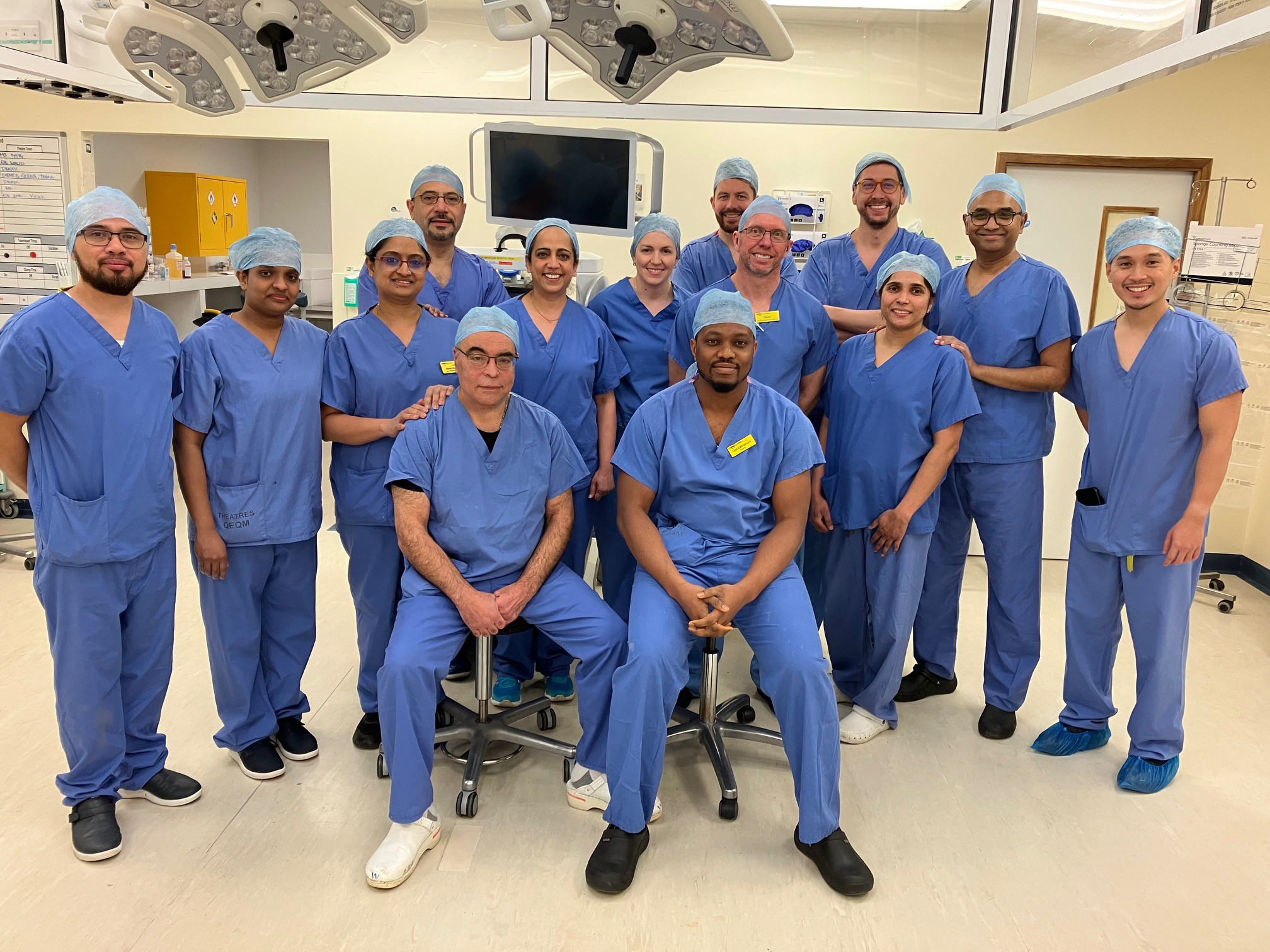
First robotic hysterectomies at QEQM
Surgeons at the Queen Elizabeth The Queen Mother Hospital in Margate have carried out their first robot-assisted hysterectomies.
Gynae-oncology consultants Fani Kokka and Rema Iyer operated using the Medtronic Hugo robot, which was installed this year.
Mum and grandmother Kirstine Goldsack, 56, was one of the first patients to have the procedure, on Friday, 20 February, and was able to go home the next day.
Kirstine, who lives in Canterbury, had opted to have her womb removed after experiencing bleeding after the menopause.
She said: “I was a little bit apprehensive at first when Miss Iyer said it would be with the robot, but I was also curious.
“Technology is always moving on and it felt good to be able to play a part in helping with the advancements.
“Recovery is going well, and each day is a step further, and I can get out and about and eat whatever I want.
“It’s been a really positive experience and I’m very grateful to Miss Iyer and the team for giving me the opportunity to be one of the first patients.”
Kirstine, who works in education, had tried other treatments to control the bleeding but nothing had worked.
She said: “I gave everything that was suggested a good go, but nothing seemed to conquer it.
“It was affecting my quality of life; I wanted to enjoy my grandchild and to plan things but I could never predict how I would feel.
“It got to the point where I had enough, and a hysterectomy felt like the best way to resolve it.”
Rema said: “I am delighted to be able to offer robotic-assisted surgery to our patients.
“The benefits are wide-ranging, from faster recovery and lower risk of infection, to more precision and control.
“This means there is less tissue trauma and greater accuracy. This investment in the latest technology means we are able to provide safer, more advanced care to our communities and will also help us recruit more consultants to join us in east Kent.”
You can see a video of the surgery on YouTube.
The NHS National Cancer Plan aims to expand robotic cancer surgery from 70,000 procedures a year to 500,000 by 2035.