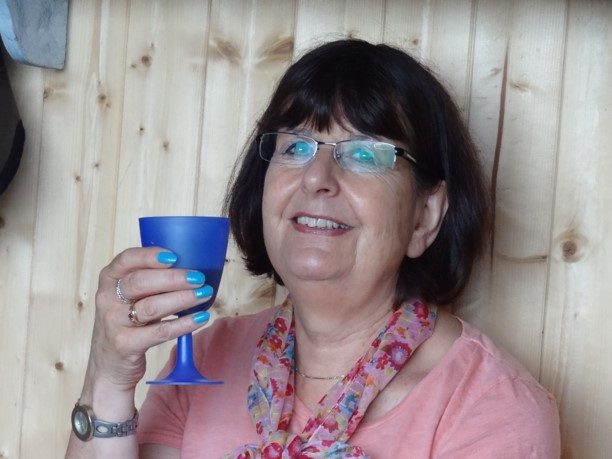
Hospital teams form guard of honour for Mary’s final journey
Hospital staff formed a guard of honour to show their respect to a caring woman who chose to save lives after her death.
Mary Noble had registered as an organ donor, and her kidneys were given to two patients on the transplant waiting list. Her family also agreed to donate her tissues, such as heart valves, potentially helping dozens more people.
The 77 year old died at the Queen Elizabeth The Queen Mother Hospital in Margate, and her husband Alastair, said she would have been touched by the teams’ gesture.
Alastair, who was married to Mary for 53 years, said: “All of the staff of the intensive care unit stood to form a guard of honour as we wheeled her out. Then the entire staff from the operating theatre were lining the corridor to pay tribute.
“It was a deeply moving gesture and, in doing so, showed us what a special and rare gift organ donation truly is.
“The whole team went out of their way to make an unbearable moment more bearable and to show the respect they had for Mary.
“It was very moving end; she would have been amazed and flattered.”
Mary, a former plant nursery manager and keen gardener, died after a bacterial sinus infection spread to her brain. Repeated courses of antibiotics did not clear it, and after her mobility and speech suddenly deteriorated she was taken by ambulance to the hospital.
Doctors put her in an induced coma, and an MRI scan revealed the infection was destroying areas of her brain. Initially they hoped she might recover at least partially, but her situation worsened.
Alastair said: “At first it was thought she could survive, but that she would be paralysed down one side, but as time went on we got to the point where even that would not be possible.
“That’s when we met Simon, the specialist organ donation nurse. He told us she was a registered organ donor. It wasn’t something we had recently spoken abut but it felt entirely in keeping with her.
“Her mum had donated her body to science after undergoing one of the first major heart operations, and Mary had always given her time to causes she believed in. It seemed natural that she would want to make this final act of giving.
“We spoke about it as a family, but there was never really a question. The arguments for organ donation are pretty solid, and we would never have said no. It was what she wanted. There was no pressure from anyone. We made the decision together as a family.”
Alastair, and the couple’s daughters Cara and Gemma, decided to go ahead with the donation. Potential recipients were identified and, while arrangements were put in place, the family spent their last day with Mary in the critical care unit at the hospital, playing her favourite music including Sting and The Rolling Stones. They bought in her favourite teddy bear, a hot water bottle cover, and cards with special messages in.
Alastair said: “We took it in turns to talk to her and tell her how much we loved her.
“Just before midnight everyone was ready so we wheeled her out, and saw the guard of honour, which really blew us away.
“They had also put candles in the room next to the theatre where the operation would take place, so we played her music, held her hand and stroked her hair as they removed her life support.”
Mary died in November, and her funeral took place just before Christmas, with friends and family packing out Herne Bay crematorium.
She and Alastair had moved to Beltinge, near Herne Bay, in 2013, and Mary was treasurer of the Beltinge Gardeners Society and a member of the Kent Hardy Plant Society and Whitstable Horticultural Society. She was also a trustee of the Beltinge Memorial Hall, and helped at monthly meetings of the Herne Bay Historical Records Society.
Mary was also a guide at Brogdale Farm in Faversham, home of the National Fruit Collection, and her family have donated her books and notes to help future guides.
Alastair said: “I think about her last few days several times a day, and I want to talk about it so it might help another family to think about organ donation.
“I think everyone knows it is a worthwhile thing to do, but knowing that and then facing the reality is quite different.
“The support from Simon and his colleagues, and everyone in the critical care unit, has been fantastic.
“I think it is brilliant that Mary was able to stop another family experiencing this loss, and I know she would have been proud.”