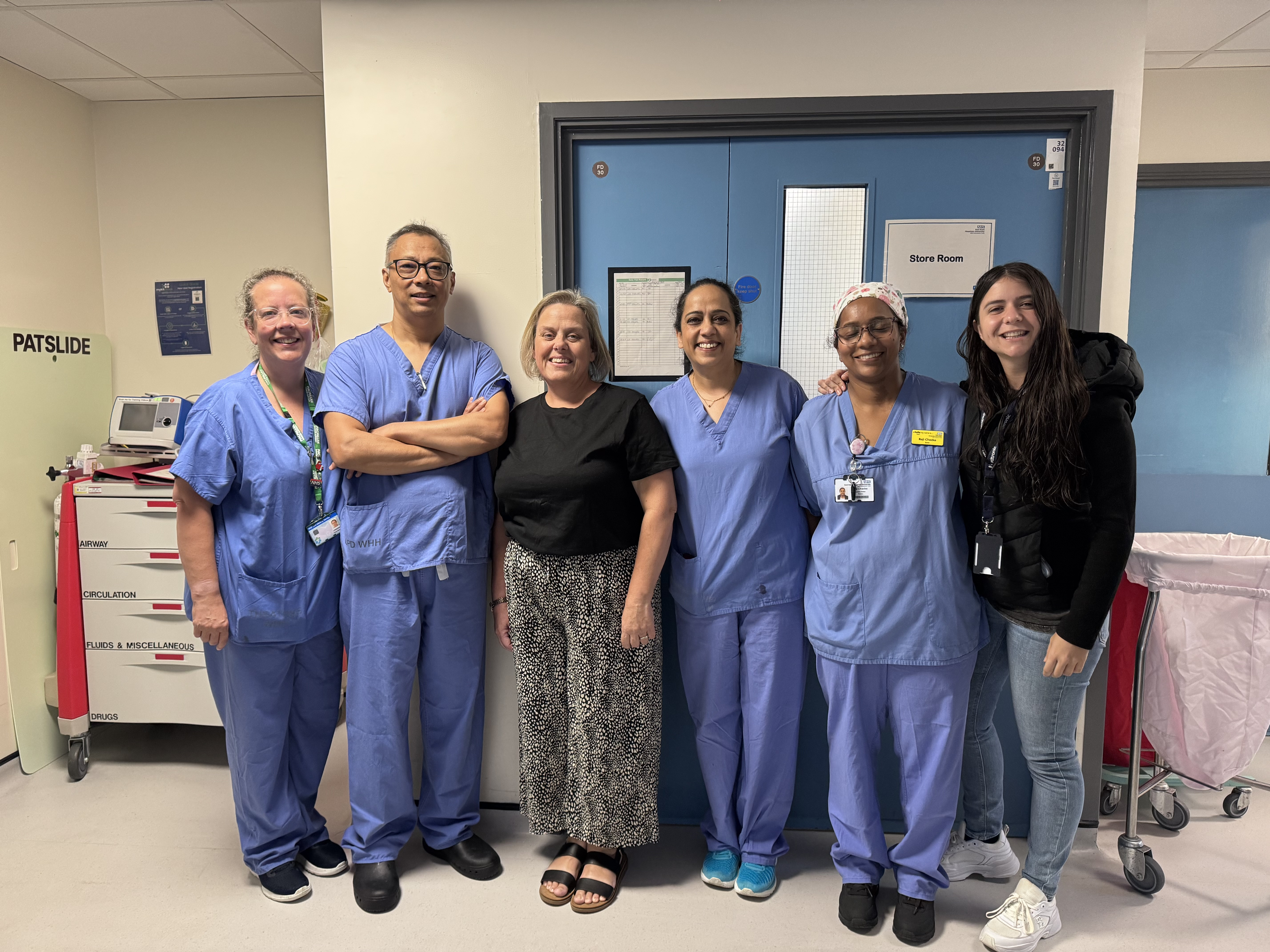
Teamwork milestone for Ashford surgical teams
A school kitchen assistant was one of the first in the UK to have combined cancer surgery using the HUGO surgical robot.
Consultant colorectal surgeon Mr Ashish K Shrestha, and consultant gynaecologist Ms Rema Iyer led teams during the eight-and-a-half-hour procedure at the William Harvey Hospital in Ashford.
The intricate procedure using the HUGO robot was to remove a five-centimetre tumour from Keely Cookson’s bowel. Medics initially feared it had spread to her womb, and she had her womb, ovaries and fallopian tubes removed at the same time.
Mr Shrestha said: "This represents our first combined robotic case involving true cross-specialty collaboration on the HUGO robotic platform.
“It demonstrates what can be achieved when different specialties come together around a shared goal of delivering the best possible care for patients.
“Success in complex cancer surgery depends on teamwork, and this operation reflects the dedication and expertise of a remarkable multidisciplinary team.
"I would like to acknowledge the enormous support received from our colorectal consultant colleagues, specialty-trained surgical specialty doctors, theatre staff, theatre support workers, managers, oncologists, cancer nurse specialists, stoma nurses and anaesthetic colleagues. This achievement belongs to the entire team."
Keely, 53, who lives in Dover and works at White Cliffs primary school, was able to go home just five days after the surgery.
The mum and grandmother said: “I felt like I had been hit by a bus afterwards but I was so grateful and the teams were absolutely fantastic.
“Everyone was lovely and nothing was too much trouble.
“It is amazing what they can do with the technology and I feel so lucky to be able to benefit from their skills.”
Keely was diagnosed after noticing changes in her bowel habits, including needing the toilet soon after eating, and mucus discharge. After initially dismissing it as menopause-related, she decided to get checked at the end of last year and was diagnosed in January.
She said: “No one likes talking about bowel habits, it does feel embarrassing, but it could save your life.
“If I had left it any longer it could have been too late, as it was already stage 3.
“This year has been a roller coaster of emotions and, although I had it in the back of my mind, it was still a total shock to be told it was cancer.
“But you have got to face it and do what you have to do to get to the other side.
“I have got a granddaughter and I want to see her grow up, so I just got on with it.”
Keely needed radiotherapy and chemotherapy at the Kent and Canterbury Hospital, which shrank the tumour by half so the procedure could go ahead.
Instead of a traditional, highly invasive operation, the team used the robot to perform the delicate procedure through tiny incisions. Mr Shrestha was assisted by surgical care practitioner Mrs Larissa Williams, while Ms Iyer was assisted by Ms Vicky Morgan.
The team also included consultant anaesthetist Dr Philip Blackie, theatre practitioners Raji Chacko and Jeannie Blackwell, and other colleagues including from the HUGO team.
Surgeons have now completed almost 50 robotic colorectal procedures at the William Harvey Hospital, and almost 90 including at the Queen Elizabeth The Queen Mother Hospital in Margate since the HUGO robot was introduced earlier this year. They were mostly technically demanding and complex rectal cancer cases.
They were able to remove all the tumour and Keely will not need any more treatment. She had a temporary stoma – a surgically created opening fitted as part of the procedure to allow her bowel to heal - and is hoping to it reversed in the new year.