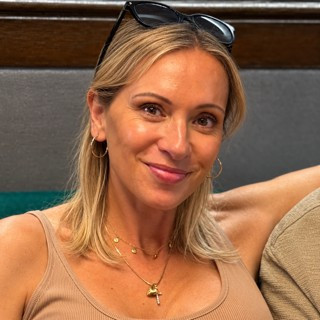
‘The fear of cancer never goes away’
When Francesca McKinlay found a lump in her breast, she had no idea of the impact it would have on her whole family.
After gruelling treatment, including surgery, chemotherapy and radiotherapy, she was given the devastating news her cancer had been caused by a faulty gene.
Her mum had also had breast cancer, and her grandfather died of pancreatic cancer, which is also thought to have been a result of the gene mutation.
The 49-year-old mum of three, who runs her own inventory business and is sharing her story for Breast Cancer Awareness Month, said: “It was absolutely awful. I had gone through all the treatment, and was looking forward to feeling well and my hair growing back and being able to get on with my life, and then I was faced with this.
“I have three sisters and a brother, and three of us were found to have the gene, as well as my mum.
“One of my sisters opted for a mastectomy after watching me go through the treatment, and is having her ovaries removed next year.
“My brother needs additional tests because of the risk of prostate cancer, and it’s also affected my cousins – one has had ovarian cancer and was found to have the gene.
“I do feel grateful that we have the knowledge, and the ability to make choices that might mean the next generation doesn’t have to go through this, but it’s incredible that one little lump has led to this.”
Francesca, who lives in Gravesend, opted to have her ovaries removed in 2021, a year after her cancer treatment, followed by a mastectomy and reconstruction in 2024 to further reduce her risk of developing cancer again.
But the gene also increases the likelihood of developing pancreatic cancer, and she said the fear of another diagnosis was always there.
She said: “I had a break from hospitals after having my ovaries removed, although I was having mammograms every six months.
“Then at one check-up they wanted to do an ultrasound as well and suddenly it all came back. I was in the same room as when I was told I had breast cancer, with the same radiographer, and I was shaking like a leaf because I knew they must have seen something.
“I truly thought it was back, but thankfully within half a second of starting the scan I was told it was fine. I decided there and then to go ahead with the mastectomy.
“Even after that the fear never goes. I regularly check myself, as if one tiny cell was missed it could come back.
“It is frightening, particularly the thought of pancreatic cancer. But you learn to live with it, because you don’t have any other choice.
“One of my good friends died of breast cancer, and she would do anything to be here and so I try to do everything I can to stay well.”
Francesca attends a support group run jointly with East Kent Hospitals’ specialist family history nurse Suzannah Fitzgerald, and shares her experience with other women.
She said: “It really helps to connect with others to share advice and offer support.
“I feel very lucky to live in a country where we have access to research and knowledge, and I have hope there will be more change in my lifetime with better treatments and understanding.
“I have hope that I can see my kids grow up, and their children too.”
Francesca had her treatment during the Covid pandemic, which brought additional challenges, but she tries to see the positives.
She said: “There were days I didn’t want to get out of bed, but you have to.
“My sisters took it in turns to take me to my appointments, and I sat in the back of the car with all the windows open.
“It was awful and hard and scary, but I didn’t miss out on anything because no one was going anywhere because of the pandemic.
“And I didn’t get the virus and need to go to hospital. There is always a positive if you look hard enough!”
Francesca’s advice to others is to read as much as possible, ask questions, and never simply accept what you are told.
She said: “I had to push for genetic testing and I’m so glad I did because it has given us such valuable knowledge.
“I still read every story about breast cancer. I like to look for a positive angle, and it isn’t always there, but everything is increasing our understanding and that can only be a good thing.”